Inhospitable times for China’s hospitality industry

As Shanghai enters the 12th day of what was originally billed as a 4 day lockdown, the impact on businesses is very visible. We have clients who are affected and looking at their struggles and financial reforecasts for the year gives us a sense of the pain that many industries will face in China this year.

Nowhere is this more marked than retail and hospitality – businesses that depend entirely on people being able to move about freely. For this piece, we’ll focus on the hospitality business, the impact of the latest round of lockdown in Shanghai and some thoughts on what to do going forward.

We went back and looked at some statistics from 2020 when the pandemic first hit and there was a round of closures / voluntary quarantine and so forth. Bear in mind that then, it was countrywide measures whereas now we’re looking at far stricter measures but only for key cities and affected areas.

What stood out was a sharp drop in room occupancy (71.4% in Beijing and 63.9% in Shanghai) that led to corresponding drops in REVPAR (75% and 69% respectively). Revenue for all star hotels in China in 2020 dropped from 671 billion RMB in 2019 to 461 billion, the first time since 2014 that the industry shrank. Back in 2020, 73% of all hotels in China closed for an average of 27 days during January / February 2020 – which was the peak CNY travel season.

All of which goes to show that lockdowns in 2022 will have similar, deep, painful impact on the hotel industry – even if it’s not nationwide this time around. Since 2020, domestic travel within China has slowed and international travel to China has slowed even more, with only citizens and work / residence visa holders allowed back, so the industry still hasn’t recovered from the blows of 2 years ago.

One interesting dynamic that came up as China worked out a quarantine policy around April 2020 was the creation of the “quarantine hotel” business model. Hotels from almost every star category feature in the list of approved quarantine hotels where incoming travelers have to stay for 14 days, paying for their own rooms and meals. By and large, room rates are similar to normal rates, meals are fairly basic and not provided by the hotel kitchen, and there is no housekeeping for the duration of your stay – so it seems like a good way for a hotel to keep revenue going during this time. On the downside, however, there are some very tangible cost issues around putting in more manpower to ensure contactless delivery of meals, disinfection, keeping track of each patient’s quarantine history and so forth. Staff are also reluctant to work in a quarantine hotel since there is some additional risk of being infected. Most important is the risk that being branded a “quarantine” hotel may adversely affect the brand in years to come, with people reluctant to visit it just after these measures end.

What can you do if you’re running a hotel and need to find ways to survive the next 12-24 months as China continues to pursue strict lockdowns and other restrictions to achieve zero-COVID? Clearly, travel is a fickle source of income since you could open up this week and be shut down again next month. How can you drive revenue up and costs down without diluting or losing your brand for the long term?

There is no one-size-fits-all type of answer here but the core of it lies in redefining a local market that you can serve which is not dependent on travel, is available in any time but a total lockdown of the city and is either light on resources or delivers consistent long-term revenue. Depending on your hotel positioning, location and the typical consumer profiles you serve there are a few different ways to approach this which we can help you think about.

At Searchlight, we work with domain-experts in various fields as and when needed. We have access to experts from the hospitality industry who work with us to help clients address their short-term business pressures without losing sight of their long-term brand health. Get in touch at enquiries@searchlightchina.com to find out more.


Think global or local? Confused?

MNCs often find it hard to manage their China business. Local teams insist that it’s different and needs a unique approach. Regional and global teams are worried about departing from a brand framework and business strategy that’s proven successful everywhere else in the world. How can you frame this interaction positively and help the business move forward?

We work with a mix of MNC and local clients. The local clients are typically what we’d call “mature startups” – they’ve proven the viability of a business model, have a decent amount of funding and are in the process of scaling up.

With the MNC businesses, we’re usually dealing with something that’s been around for at least a few years, done very well at one point and then declined precipitously thereafter. We often find that the local marketing / business team in China has a very different view of the market and the challenges than their counterparts from global or regional management. Given that the business has not progressed in recent years, the China team is required to do a lot more in terms of aligning their global colleagues before getting approval for any of their strategies or support for new product development / special treatment for China.

It’s hard to generalize and say why the global-local communications divide is so much more extreme for China than for other markets but here are a couple of factors:

  1. The marketing ecosystem in China has fundamentally different dynamics than the rest of the world – not just different players but different roles, different routes to market and different power structures to anywhere else
  2. Consumers in China are fundamentally different to those elsewhere and those differences are starting to increase as time goes by. The specifics of that may change from category to category but as a broad theme, people here have a different relationship with (global) brands and the purchase decision-making process is different than elsewhere

Let’s try and illustrate those two points with a few things we’ve observed or analyzed over recent years.

Ecommerce and digital environment:

ECommerce in China is far more dominant than anywhere else in the world (40%+ of retail sales) and unlike anywhere else, dominated by 3rd party platforms (over 80%). This means branded sites and control over your own brand / data in this space are far lower in China. It also means you can’t really optimize and attribute the funnel since you don’t have access to funnel data

Ease of launching a new product without a brand

Every year there is a rash of new products that launch on TMall and rapidly achieve a sales volume of RMB 500 million. Many of these then disappear in subsequent years. IF you talked to the people running these businesses they would all tell you that they don’t need any investment in branding – consumers already love their brand.

That’s not entirely true. The way ecommerce works in China it is very easy for consumers to search and discover new, unknown brands. Often, the platform or even government regulations for selling in certain categories remove all or most of the risk in buying an unknown brand and there are large numbers of consumer reviews to look at when making a purchase decision. If a new brand is able to get some initial traction, it can very quickly grow a big business, but without a real brand and with only functional benefits, it is only a question of time before someone else comes along and manages to be slightly cheaper / faster / better for long enough to take their place. However, that endless churn also creates tremendous pressure on global brands to establish a long term advantage that can outlast the relentless pressure of copycats. One other thing to note is that a lot of these new brands are funded by VCs and there is an endless flow of capital for anyone with a convincing story on how they will build a 500 million RMB business online.

Growing “patriotism” amongst Chinese consumers

While this is obviously a very broad generalization, younger Chinese consumers are showing a strong preference for local brands over global ones. This is not driven only by patriotism but also by the sheer abundance of local choices and a sense that in many categories, there are local nuances to consumer needs that “Western” brands cannot understand. A lot of that ties back into the messages of confidence in their destiny as a world leading economy and self-reliance as a nation that, as the COVID story unfolded, has set China apart from the rest of the world.

Following trends from Japan / Korea rather than the West

Particularly in beauty / cosmetics/ fashion related categories, Chinese consumers are now more likely to be influenced by trends from Japan and Korea than from anywhere else. We’ve seen this in the color contact lens category, for instance, where Korean and Japanese brands created a trend for treating contact lenses as fashion accessories rather than serious vison-correction/eye-care products. That was further enabled by the perception that lenses in China are a government regulated category and therefore even an unknown brand is risk-free (not entirely true). Add to this the tendency for following KOLs/网红 and suddenly you have an inrush of new consumers into this category with none of the behaviors that traditional eye-care consumers exhibit.

What that means for MNCs

While those are generic trends, in the context of each product category it is important to understand and interpret them, then explain them to everyone involved in a global brand and its fortunes in China. Doing so can help avoid painful experiences, failed experiments and situations where the local team and global team are unable to agree on a strategy.

In recent times we’ve worked on two such clients. In the case of one, we resolved a 3 year strategy deadlock by diagnosing and explaining market dynamics in a way that explained all of the facts, data and paradoxes that everyone had observed. That client is now moving ahead with an aligned strategy for China that is different from everywhere else. In the case of another, we recommended and are now helping to implement a Direct-To-Consumer approach for a company that’s always sold B2B2C in the past. In both cases, we were able to help explain the situation in terms which made sense to both global and local marketing teams, drive alignment around a strategy and the resources / input required from each and eventually move them forward.

Searchlight has an experienced team of marketers and strategists with both China and international experience, which gives us a perspective on the market that often serves as a bridge between local and international teams within a global company. Reach out to us at enquiries@searchlightchina.com if you think we can help you with interpreting your China business challenges.

Awash with data, athirst for insight

As we look back on the client projects we worked on through 2021, one thing that stands out as a common theme across many of them is that the client already had more than enough data or research or information of various sorts to make good strategic decisions. Yet, somehow, they were usually in one of two modes – either looking for even more data and research to justify decisions or making decisions without considering any of the information they already had at hand.

In this post I’ll try and lay out why this happens and how to avoid it (apart from the obvious solution of hiring us to solve the problem, of course!)

First, some quick examples from the clients we worked on:

  1. An online subscription platform where everyone in marketing was obsessed with growing the user base until we figured out that their main issue was the hemorrhaging of heavy users every year
  2. A retail client with almost 30 people in the marketing department, an annual research budget well in excess of 2 million RMB and tons of research that hadn’t got a clear brand architecture in place and did every campaign starting from first principles instead of building on what they knew
  3. A retail F&B chain intent on building more outlets instead of first understanding how to make their existing outlets profitable by getting more of their members to visit more often

There were others, of course, but I was taught long ago that 3 bullet points is all you need so I’ll stop there.

Why does this happen? To my mind, there are three fundamental reasons – sometimes driven by diametrically opposite dynamics that work in organizations at different stages of development.

  1. Lack of understanding of what a differentiated strategy should look like

Many clients we meet don’t really understand the power of a clear strategy. They think doing what their competitors do, slightly cheaper, faster or better, will do the trick. They’re endlessly tactical in approach, always rushing to produce one more “seasonal” or “topical” campaign rather than setting up a clear long-term strategy built around a clear brand architecture

2. Disconnect between the data and the decision-makers

This happens usually because the person who has access to the data doesn’t have to make decisions and the person who’s making decisions doesn’t have access to the data.

I’ve seen it happen in a large organization where the research director thought her job was to manage the research budget and timelines for delivering the research projects marketing commissioned. She never thought about things in the context of what decisions needed to be made, what sorts of information were required, what already existed and therefore what minimum additional information needed to be generated. The head of marketing, on the other hand, never thought in that way either, so the briefs to the research team were not based in information requirements for strategic decision-making.

I’ve also seen this happen in startups where the CEO doesn’t understand marketing / consumer data, someone else is managing the consumer / transaction data but doesn’t use it to create reports or headlines for the CEO to act on.

Both of those situations lead to lack of a clear research / information management framework and break the link between strategic decision-making and the data that should guide it.

3. Lack of ownership of an overall business outcome

This is slightly linked to the previous point but a bit different, tending to happen more in larger teams where a silo mentality creeps in. The core problem is that people think they’re responsible only for one specific thing rather than understanding their role in driving an overall business outcome.

For one client, the head of marketing kept telling the entire marketing team that their job was driving traffic to the store – what happened after they got there was not their problem. They didn’t spend enough time thinking about what consumers did in the store, what they did after they bought the product and experienced it, how they then talked about it to other consumers – all essential parts of the purchase-decision-making chain and therefore of marketing strategy. Brand managers thought their role was to get briefs out the door on time so the agency could come back with campaigns – not collate everything the organization knew about the business to identify what they really needed to do to drive it forward.

At another, each “brand manager” focused on their role of driving either annual subscriptions or one-off orders without understanding that often the same consumer was behind both kinds of transactions and that there was considerable overlap between what they were all trying to do. The “consumer service hotline” people thought their job was offering compensation for damaged product rather than understanding how disappointed the consumer was and finding ways to address that disappointment with the brand. Small wonder that the brand lost large proportions of its heavy users when their subscriptions ended.

How do you avoid these situations?

Well, for starters, it’s really important to understand how information / data / research feed a good, differentiated business and marketing strategy, and what that strategy should look like. This means, right at the start and perhaps every 2-3 years, doing a thorough business and marketing review, ensuring there is a well thought-out strategy in place based on consumer, market and business knowledge.

Then, it’s important to preserve the link between information and decision-makers so that there is constant input into the ongoing progress of the business against that strategy. This means a proper MIS system so that on a regular basis, key business information is reviewed by the people who make decisions from it. A marketing head who does not know revenue and brand health data or a CEO who doesn’t know last week’s numbers can’t make good decisions about the business.

Last, it’s important that everyone in the organization sees their role in driving the holistic goal that defines success for the business. When people define their role very narrowly they are likely to miss the wood for the trees.

You’ll notice that my headline had the word “insight” in it and I’ve very cleverly avoided getting into it later on. I’m not going to get into it now either, except to say insights are what you build strategic choices on. Sometimes that means taking a leap from the data you have, sometimes it means unearthing data that other people don’t have – either way it gives you an “aha” moment on a way to build your business that isn’t entirely obvious until you see it.

At Searchlight we work with our clients to help them make better decisions about business and marketing strategy. A big part of this is creating better processes and decision-making frameworks that align different internal specialists and all internal and external information around a clear organizational objective and strategy. Reach out to us at enquiries@searchlightchina.com for more.

China’s Double 11 shopping festival cooling is an opportunity for brands to re-think

Unlike previous years, there is no barrage of real-time reports and chest-thumping assertions of being even bigger and better than ever before.

Double 11 (November 11th) became famous as the world’s biggest online shopping day, dwarfing any such event anywhere in the world in terms of revenue. While it’s gone from a single day to a more extended shopping period, the final day sees consumers rushing to take advantage of promotions and deals before they disappear and hourly updates from Alibaba and JD on GMV and how they’re outperforming previous years.

This year, there was no real-time reporting on the numbers. No astonishing claims around the previous years day one sales being breached in the first minute. No hype, no hoopla. The figures that were eventually released did show an 8% growth for Alibaba and 28% for JD, though we should parse those carefully to make sure we’re comparing like periods.

Now, there could be several reasons for the general cooling of sentiment over 11.11, the lack of enthusiasm for reporting real-time statistics and the lower growth rates. From reasons as far-fetched as some people being apprehensive of COVID being spread on courier parcels during this period of intense delivery logistics, to a slight dampening of economic sentiment, to tech-giants in China being scrutinized to the point where they’re not comfortable being in the public eye.

It’s very likely that next year everything will bounce back and we’ll see the boisterous optimism of previous years. However, for the first time, we saw big brands being forced to engage in an ongoing series of promotions and discounts far later than they usually do. For the first time, there was a sense of sellers chasing buyers on the platforms rather than buyers chasing that elusive “now or never” deal. Perhaps that experience may make brands question, just a little bit, what they’re getting out of 11.11 and other shopping festivals.

From our perspective, one of the main purposes a promotional period serves is helping to drive new users. If you’re a brand with a large base of current users, does selling to them at deep discounts really help the brand? Especially if you’re discounting below an affordable level? Does it make sense to be in the hurly-burly of a crowded, noisy environment like 11.11?

While it makes sense for a lot of new brands, we believe there are many businesses who need to think about a counter-intuitive approach to the big shopping festivals. Maybe the first “cool” year in the history of 11.11 will spark such thinking.

At Searchlight, we help clients think about their China business and marketing – often coming up with counterintuitive, effective strategies based on deep experience in this marketing ecosystem. Reach out to us on enquiries@searchlightchina.com if you’d like to learn more about what we do and how we work.

Famous in China (7) – A Cautionary Tale

To try and create greater familiarity for those living elsewhere, we’ll periodically profile some China brands and businesses that we believe will be household names across the world soon – though this week’s example is a cautionary tale of a Chinese brand that was already in many markets around the world but may need to consolidate and regroup in China before it continues its expansion.

Lining up for a seat at the table

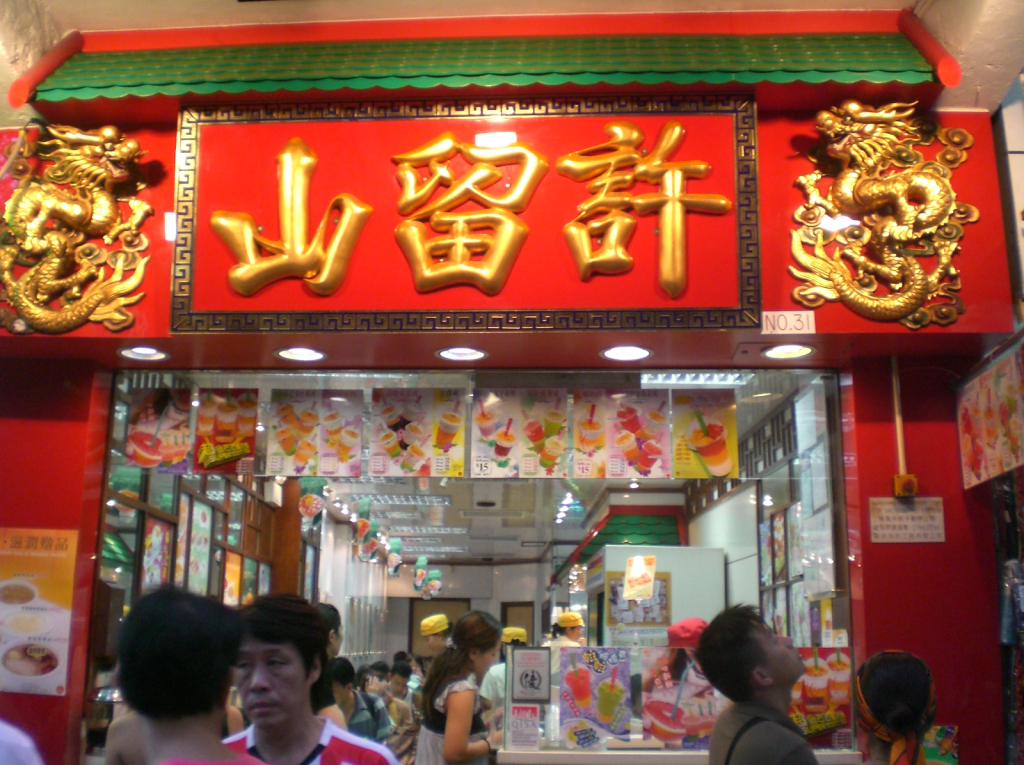
Hui Lau Shan (that’s the Cantonese rendering of 许留山 – Xu Liu Shan) was a pioneering dessert chain that started in Hong Kong in 1960 and eventually expanded into several markets around the world. Hong Kong desserts is a category that is very popular and huge across China and Southeast Asia and Hui Lau Shan is one of the reasons why. They invented many desserts that are still popular (and copied by many new dessert shops) and eventually had 260 stores across China, HK, US, Korea, Singapore and the UK of which about half were directly operated by the holding company in HK while the rest were franchises. Nearly 50 of those stores were in HK.

In 2007 the original family (3rd generation) sold off the HK business to a Malaysian company Navis Capital – this company eventually had a dispute over the ownership of the company name and so the franchisee in China, Hui Lau Shan was forced to change its name to Tang Lau Shan. The company was then acquired by Royal Dynasty International Holdings in 2015 but over the course of 2020, faced winding up actions from several of the property owners from whom it leased premises. It seems to have weathered that storm with some negotiation and settlements for now but still faces a somewhat bleak future.

Why is this a cautionary tale? Well, there are a few different aspects to it that fit the description.

First, the 3rd generation owners in selling to the Malaysian investment company seem to have made a classic mistake in not reading the fine print. That company wanted to enter China, discovered they could actually prevent the original franchisee from using the brand name there and forced them to change their name while the investor was able to launch new stores under the original name. While the family sold the business and moved on, their franchisee who had a 8 year contract suffered and in the long run the company suffered through losing that franchise revenue and the expansion momentum in China at a moment when the category was exploding in China (competitive HK chains as well as home-grown mainland China competitors have both thrived in the last few years while HLS was mired in this dispute).

Second, the original owners had a reputation for innovation, with several new desserts that have now become popular. However, as the company has evolved, it has stopped that product innovation and been copied by new startup dessert chains, or in some cases out-innovated by them with new versions of the original desserts popularized by HLS. Their most standout mango pomelo sago (楊枝甘露) has now been evolved into flavors for bubble tea by brands in that space and become a standard dessert everywhere else.

Third, HLS has been, for too long, a HK focused business. Even until a few years ago, 45 of it’s 260 outlets worldwide were in HK, significantly more than in mainland China which is a much larger opportunity.

Fourth, HLS has about half owned / half franchised outlets – neither of which is bad in and of itself but speaks to a lack of clarity on what kind of business they want to run.

There are no separate financials for HLS since it’s part of a holding company (Royal Dynasty) but their unpaid rental woes in 2020 and reports of a declining business are clear signs that their owned outlets and overdependence on HK as a market are core to their problems.

Unlike some of the other brands that we’ve featured here, Hui Lau Shan probably needs to rebuild a China business and potentially trim down its bleeding HK business in order to be well poised for the future. After which, funded by a large revenue base in the world’s largest market for Chinese desserts, it can continue to expand across the rest of the globe.

While our focus as a consultancy is making new brands famous in China, there are many (already) famous Chinese brands that aren’t well known overseas. We will be bringing them to light in this series over time.

If you’d like your brand to be famous and successful in China reach out to us at enquiries@searchlightchina.com – we work with both local startups as well as international brands that would like to do better in this market.

The Goldilocks Zone (part 2)

IKEA vs. Home Depot

6.45 million new homes were built in China in 2019. Culturally, owning a home is a prerequisite to getting married and starting a family, and as a result 90% of households own their home; one of the highest ownership rates in the world.

Two brands, IKEA and Home Depot seemed perfectly poised to capitalise on this environment but where one succeeded, the other floundered. The difference is partly in the fundamentals; one focuses on furniture, the other hardware and materials. But there’s more to it than that.

Home depot: a head start but unable to win the race

Home Depot, is a US-based home-improvement store, stocking everything from paint to power tools, curtains to cleaning supplies. They entered the China market in 2006, acquiring local chain The Home Way which immediately gave them 12 outlets across 6 cities. However, after 6 years, they had failed to turn a profit and took the difficult decision to leave the market.

What went wrong? Or was it wrong before it even started?

As many people pointed out after Home Depot’s departure, the average Chinese person does not want to decorate their own home. For one, home decoration is a relatively new phenomenon in China and people didn’t grow up helping their dads build sheds and patios like the average American or European, so most people simply don’t have the skills. Added to which, most people buy new homes in a 毛胚 state i.e. an empty concrete shell, so decorating in China is a much more involved process than putting up some shelves. But more importantly, as the country has developed, people have moved away from manual labour and doing-it-yourself goes against the idea of upward mobility. “You Can Do It, We Can Help” doesn’t work if I am planning on having someone to do it for me.

IKEA: building aspiration

IKEA on the other hand has seen huge success in China, with 2018 revenues growing more than 9 percent to exceed 14 billion RMB. According to Statista, China accounts for 4.8% of IKEA’s global revenue.

So why has IKEA succeeded where Home Depot did not?

Firstly, IKEA recognised the distaste for DIY in China, while also understanding the “IKEA effect” (a cognitive bias whereby people place more value on a product they have contributed to) doesn’t require complete DIY and can be had through ‘soft’ decoration, while leaving the ‘hard’ decoration to the professionals. So instead, they focused on the Scandinavian design of their furniture. They emphasized the results of decorated rooms, while playing down the need to assemble it yourself; even offering to send workmen out to assemble the furniture for customers.

Secondly IKEA invested in building a brand. Their stores are a destination (with the restaurant becoming a place for older singles to meet), there are smaller downtown stores for more day-to-day engagement, and it has invested heavily in digital marketing. Through the emphasis on design and brand building, IKEA furniture has become aspirational to Chinese home owners.

Could Home Depot have learned from IKEA?

In the first post in the Goldilocks Zone series, we discussed how Subway took an oversimplified approach to China; transplanting what worked overseas; and Home Depot seems to have fallen for the same trap. So, taking some learning from IKEA, what might have worked better for Home Depot?

It should be noted that a major reason for the differing fortunes of these two brands comes down to the fundamentals of what they sell; one sells modern Scandinavian furniture, while the other focuses on hardware and materials. However, that is not all that Home Depot stocks; they also carry furniture and appliances. Focusing less on hardware and more on these end-consumer products seems to be an obvious opportunity, especially given their American origins would signify high quality.

Secondly, while the end-user is not usually involved in the selection of materials, they care greatly about the quality and the health impact of those materials; people tend to avoid oil-based paints and it’s common to let a newly decorated property air out for one or two months before moving in. So, again by leveraging their US heritage and offering guaranteed quality and health benefits over locally available materials, Home Depot could have got people involved in the selection of materials for their homes.

Finally, decorating one’s home is a highly emotive time. It’s full of imagination and fantasy and any brand helping to fulfil that dream misses a trick if it doesn’t use that to its advantage. To this end, Home Depot might have positioned itself as a provider of services or experiences; employing interior designers to help home owners plan and design their perfect home or room, and a team of skilled workers to make it a reality. They might have built digital engagement around people’s own designs for their homes or partnered with design magazines or home makeover programmes. What if they had bought and decorated some amazing properties around the country and invited KOLs to stay in them? Instead of “you can do it, we can help” it could have been “you can dream it, we can make it happen”.

This is of course all easier said than done, and we appreciate there were other aspects to Home Depot’s difficulties, but with the right approach to home decoration in China they may have seen some of the success that IKEA has.

Navigating the complexities of the China market is not easy for any brand, and Searchlight is perfectly positioned to help find the Goldilocks zone between complexity and simplicity. Reach out to us at enquiries@searchlightchina.com. We work with both local start-ups as well as international brands that would like to do better in this market.

Famous in China (part 6)

To try and create greater familiarity for those living elsewhere, we’ll periodically profile some China brands and businesses that we believe will be household names across the world soon, except perhaps for this time’s example.

It’s getting to the hottest part of summer and quite naturally, our thoughts turn more and more often to beer – that glorious drink that defines many of the best things about this season.

I made the astonishing discovery that the worlds largest selling beer is from China – but not only have you probably never heard of it, it’s very likely not even available where you are. Even more likely, it probably will never be distributed where you are – unlike some of the other brands we’ve covered in this series. Yet, it is such an astonishing success purely from a volume and market penetration perspective that we thought it would be worth a writeup.

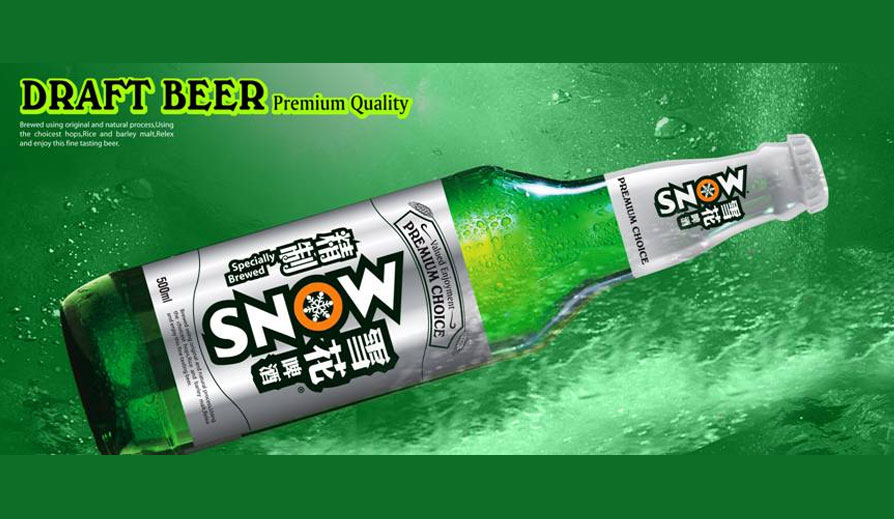
Ladies and gentlemen, introducing the world’s largest selling beer that you’ve never heard of: China’s 雪花 or Snow Beer.

Background

Snow Beer was first launched in 1993 in Shenyang (Liaoning Province), China by a company called CR Snow that was originally owned by SAB Miller (49%) and China Resource Enterprises (51%) but when Anheuser-Busch acquired SAB Miller they were forced to sell their stake in Snow for 1.6 billion USD to CRE. In 2018 Heineken acquired 40% of the company. Over the years as it became a more and more successful business, it was spun-off as a separate company and is now listed on the HK Stock Exchange as China Resource Beer (Holdings) Company Limited which has a slightly more complicated shareholding that we won’t get into now.

Financials

It was a little hard to get recent figures on beer sales around the world but the last complete audit of these numbers from 2017 shows Snow holding 5.5% of the total market worldwide, followed by Tsingtao at 2.6%. Now, Tsingtao is sold all over the world but Snow is pretty much only in China, which tells you just how big a brand can get by focusing on this one market and no others!

A look at the 2020 annual report for CRB shows their total sales at 11.1 million kilo-liters – but this is across all their brands, not just Snow. However, they still claim Snow as the largest single-brand of beer globally. The company seems to have done well over 2020, while turnover was slightly less than in 2019 (31.5 billion RMB down from 33.2), profit attributable to shareholders grew from 1.3 to 2.2 billion RMB.

Success Factors

I’d love to be able to say that Snow does well because it is a damn good beer. Unfortunately, it isn’t. In fact, the local joke is that it’s called Snow because it tastes like melted snow – water, basically.

The reasons for it’s success are very simple – it’s really cheap (under 2.5 RMB/ 330ml can for the cheapest variant) and it is available everywhere. All over China, practically in every kind of local restaurant, you can buy Snow. It lends itself to the long drawn-out toasting culture that accompanies most gatherings in China and with it’s low alcohol content doesn’t hit people as hard as baijiu. They’ve also invested in brand-building advertising over a long period of time, including once paying for a billboard that was so high up and inconvenient to remove that it remained in place for years after the brand stopped paying for it.

Snow is really a triumph of 3 of the 4 P’s in marketing – price, place and promotion. With that singular focus on being well-known, ubiquitous and cheap in China, it has achieved the status of the largest beer brand in the world.

Future Outlook

CRB seems focused on growing a premium segment, working with Heineken to introduce their premium brands and grow that part of the business in China. The annual report focuses exclusively on the China domestic business with no mention of any plans to take Snow abroad. Which means you’re probably not going to see this brand on a supermarket shelf near you anytime soon. Perhaps some day in the far future when today’s nascent trend for craft and premium beers has become the mainstay of the category, Snow may be toppled from its perch but until then, it will be one of the world’s biggest beers that is only available in China.

While our focus as a consultancy is making new brands famous in China, there are many (already) famous Chinese brands that aren’t well known overseas. We will be bringing them to light in this series over time.

If you’d like your brand to be famous and successful in China reach out to us at enquiries@searchlightchina.com – we work with both local startups as well as international brands that would like to do better in this market.

The Goldilocks Zone

That old trope about pencils in space

Stop me if you’ve heard this one…

During the space race, NASA discovered that typical ball-point pens don’t work in space. So, they invested a million dollars to develop a pen that would work in zero gravity, could write upside down and could withstand the extremes of outer space. The Soviet space programme encountered the same problem… but they solved the problem by using a pencil.

It’s an often-told story, Jon Steel even mentions it in Truth, Lies and Advertising, that demonstrates that for even the most complex of problems there is a simple smart solution. And it’s a delightful story, except for the small problem; that it’s complete hogwash! The fact is, NASA did not invest a million dollars into researching the pen. A private individual named Paul Fisher saw an opportunity and invested a million dollars of his own money to develop the pen. He sold the pens to NASA for $6 each, so not a bad investment on NASA’s part. Today Fisher still sells more than a million Space Pens a year, so not bad for Fisher either. And the Russians? Well, they quickly discovered that the graphite in a pencil breaks off when it’s used, sending tiny shards of the conductive material floating around in a zero-gravity environment where they end up in equipment, and oxygen systems and astronauts’ eyes. They bought Fisher Space Pens too.

The solution wasn’t as simple as just using a pencil. And it wasn’t as complex as investing large amounts of government money in to research with limited application. More often than not the truth is both simpler and more complex than the received wisdom. And this is especially true when it comes to China; brands tend to either oversimplify and assume that what worked in the US or Europe will work in China. Or they overcomplicate it and believe that China is still a riddle wrapped in a mystery inside an enigma and therefore the rule book must be torn up and rewritten.

Over the next few weeks, we’ll be sharing examples of brands who have either overcomplicated or oversimplified their approach to business in China. And we’ll contrast each one with a business that has found the sweet spot between complexity and simplicity and reaped the rewards.

Photo credit: https://500px.com/p/richsilver

Subway: starting from a challenging position

First up, we’ll have a look at a brand that oversimplified their approach, and that is Subway.

Until recently Subway had more outlets in the US than any other fast-food chain. In 2010 the founder believed they could match the number of outlets McDonald’s has in China by 2020. A decade or so later they have 598 stores, compared with 3,787 McDonald’s outlets and more than 7,000 by KFC. Perhaps more damning; a 2018 survey by Cint found that just 1.03% of respondents visited Subway in the past year – the lowest result of all QSRs, behind far less well-known brands like Famous Famiglia and Moe’s Southwest Grill (which doesn’t appear to have any outlets outside of North America!)

Oversimplification: what worked there doesn’t always work here

Subway is positioned as a healthier alternative to other Quick Service Restaurants, and to most people in the west, the health attributes are clearly apparent; more vegetables, wholemeal breads, less red meats and fried food all immediately shout “health(ier)”. Their communications for a long time built credibility in weight-loss.

However, in China they have been unable to build the same credentials. A major barrier in is that here, a sandwich is not seen as inherently healthy; it is placed in the same category as a hamburger, regardless of what is between the bread. There is a distinct difference in understanding of healthy foods in China vs the west; where in America in particular, healthy is generally synonymous with low fat, while in China healthy means nutritious. So, while their communications have worked to educate people about the health benefits of wholemeal bread and the low fat content of their sandwiches, they have been largely unsuccessful in overcoming this initial disadvantage.

Secondly, Subway has not managed to build the brand cachet that its rivals enjoy. The huge shares of voice and celebrity co-operations of the larger chains have driven their brand recognition and preference with clear impacts on their respective businesses.

But the biggest reason for consumers rejecting Subway in China is the menu itself. Not only does it consist entirely of western favourites like Italian Sausage and BLT, but (sin of sins) it’s cold!

Contrast this with KFC. Its’ core offering of fried chicken is seen as a nutritious food, and tray mats, instead of promoting products, talks about nutrition. Their combos come with juice and sweetcorn rather than Coke and fries, so KFC owns the positioning of the less-guilty fast food. Furthermore, KFC have successfully adapted their menu to Chinese tastes with specifically developed lines like rice bowls, Beijing duck wraps, and soy milk. The same Cint research quoted above showed that more than 70% of respondents had visited a KFC.

What could Subway have done to overcome these challenges?

The obvious would be to adapt the menu to local tastes. Locally inspired flavours, ingredients, and menu items would clearly appeal more to local palates and would have instantly improved their chances of success.

Secondly, while their set up precludes Subway from cooking much food on premises, they do have ovens and the servers will offer to heat up a sub after it is made. A new, localised menu could include options that are heated as a default. Communications could talk about ‘freshly cooked’ rather than just fresh ingredients.

Speaking of communications, a pivot from “health” to “nutrition”, while unlikely to be enough to upset KFC, would better establish health credentials from the brand.

Currently, beyond the not-convincing-enough health messaging, Subway does not have a strong brand positioning. The consumption occasions; working late, having to grab something quickly before catching a train etc. are all negative experiences. Perhaps they could build more positive occasions around a positioning relating to the American spirit. Or, given their globally inspired menu items, a United Nations of flavours.

Finally, Chinese people are rarely in a hurry when it comes to food. So while a Subway can be an excellent option for those who have little time for lunch, that is not a consumer need that is very apparent in this market. To build more positive consumption occasions, Subway could take a leaf from Starbuck’s book create a version of their “3rd space” where people are happy to spend time. Doing business in China is certainly a difficult battle for any brand, and the cards are not stacked in Subway’s favour. It seems unlikely they could ever match McDonald’s in number of restaurants in China, but with some tweaks to the menu, their restaurants, and their communications it’s feasible they could capture a larger portion of the fast-food market.

Searchlight can help your brand navigate the complexities of China and find the Goldilocks zone between complexity and simplicity. Reach out to us at enquiries@searchlightchina.com. We work with both local startups as well as international brands that would like to do better in this market.

Famous in China (Part 5)

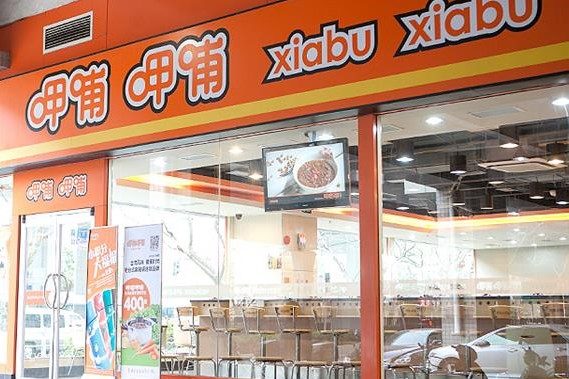
To try and create greater familiarity for those living elsewhere, we’ll periodically profile some China brands and businesses that we believe will be household names across the world soon. This month let’s look at something quintessentially Chinese – a hotpot restaurant chain called XiaBu XiaBu (呷哺呷哺)

Background

Xiabu Xiabu started in 1998, pioneering the concept of a DIY hotpot restaurant. They expanded slowly initially, until taking on some funding and rapidly growing after 2008.

The company now operates Xiabu Xiabu, which is the low price, popular brand, as well as Cou Cou, which is a more premium hotpot with herbal soups and higher quality ingredients. The founder, Ho Kuang-Chi, from Taiwan had stepped aside in recent years and appointed Zhao Yi – previously CFO of the company – into the CEO role. However, Zhao Yi left the company just a month ago and the founder has taken back the reins of leadership.

They claim more than 50% of the fast casual hotpot segment and are a leading player in casual dining in China. While rival Hai Di Lao is a better known hotpot brand and has about thrice the revenue, Xiabu Xiabu occupies a unique niche in the fast casual segment, with low prices and fast turnaround.

The company is listed on the Hong Kong stock exchange under XBXB

Financials

In one of its worst years in recent history (because of the pandemic) Xiabu Xiabu has still held its own. Revenue dropped last year by 10% to 5.5 billion RMB, profit dropped 96% to 11.5 million RMB. Those are not bad numbers to have in a year where F&B was ravaged by the pandemic.

Success Factors

The main thing driving the success of Xiabu Xiabu is a very well thought out model which has led to tremendous scalability. The store design is standardized for maximum seating capacity and efficiency. The individual DIY hotpot concept offers maximum flexibility to diners while minimizing any kitchen or food preparation arrangements – there is no chef in any of the restaurants, no complicated in-store kitchen. It’s really a business about optimizing the supply chain of fresh ingredients and delivering them to the diner on their table.

That scalability makes it easier and faster for each new store to achieve profitability, driving the ability of the chain to expand.

Future Outlook

China loves hotpot. Xiabu Xiabu, despite a hard 2020, has held on to its revenue (with only a 10% drop) and still managed to be above breakeven. That’s a great platform for the future.

They’ve had their share of controversy with a diner claiming there was a rat in her hotpot, (though apparently that isn’t a straightforward story and there may be mala fide intentions at play) but for a chain with 23 years of history they’ve been remarkably un-newsworthy, which is really a sign of consistency and food safety practices that work.

Call me sentimental, but a founder coming back from semi-retirement to take the helm and redefine the future is something I always root for. While the stock price may have declined precipitously in recent times with the somewhat unflattering annual report and the departure of two senior management executives, to me that feels like a temporary blip in what seems to be a company poised for world domination, one hot-pot at a time.

While our focus as a consultancy is making new brands famous in China, there are many (already) famous Chinese brands that aren’t well known overseas. We will be bringing them to light in this series over time.

If you’d like your brand to be famous and successful in China reach out to us at enquiries@searchlightchina.com – we work with both local startups as well as international brands that would like to do better in this market.

6.18 – China’s second “shopping day”

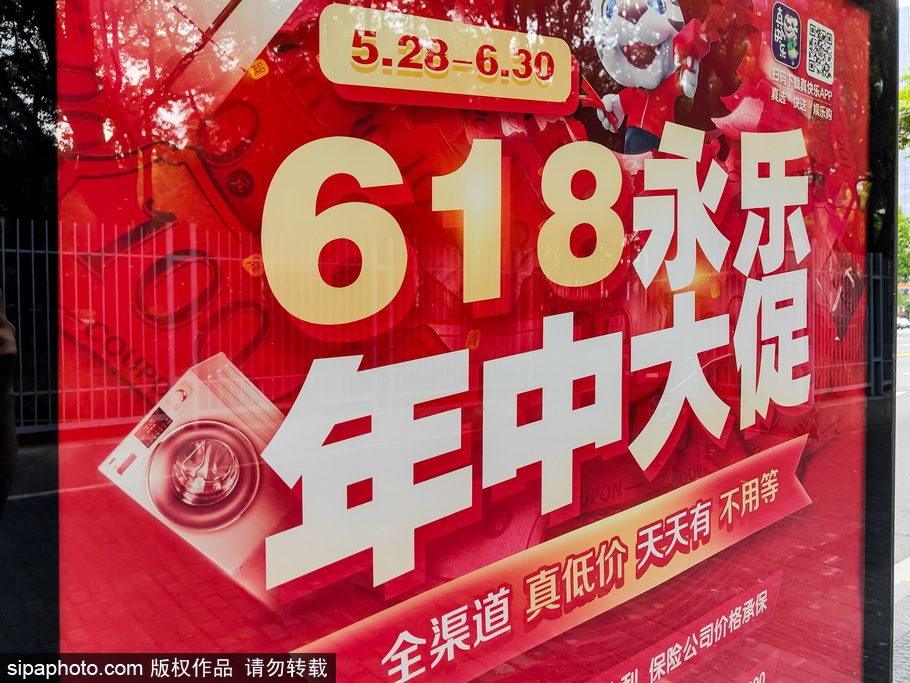
As perhaps many people are already aware, 11.11 (November 11) was launched as a shopping extravaganza by Alibaba’s TMall – initially named “Singles Day” although now it’s become pretty universal. Jing Dong (JD) launched their own special shopping day on June 18 which was their founder’s birthday and over the years it’s become China’s second largest shopping day.

Neither festival has remained exclusive to any platform – all the e-commerce, social commerce, group buying and even offline retail channels now have special pricing and promotions for these two days.

Also, neither “day” is now strictly just one day. 618 starts from June 1 when people can start putting things in their shopping carts and 11.11 also stretches effectively over nearly two weeks. (This year 618 started from May 24 so it’ll soon be a 3 month affair!)

To put things in perspective, 11.11.2020 showed a GMV of nearly 500 billion RMB for Alibaba’s TMall and 272 billion RMB for JD. For the same year, 618 showed 269 billion RMB of GMV for JD so the two days are almost identical in GMV terms for JD.

618 for 2021 has just concluded and apparently JD clocked in at 344 billion RMB, so about 26% growth over the previous year.

Two trends that are interesting to watch here are the gradual lengthening of the promotional period (whether by allowing people to start marking their “wish-lists” earlier and earlier or by having different phases of promotions) and the convergence of the sales numbers across these two key shopping festivals.

The bigger question of course, is how long these kinds of highly promotional festivals will continue and how widespread the participation of brands will continue to be. Brands must surely be struggling to continue to sell at deeply discounted prices over longer periods and more occasions every year. These were great ways for the platforms to establish themselves with consumers but as they get bigger, many established brands are questioning the value of participating in these festivals and thinking of ways of getting around the rules and systems of the big e-commerce platforms that create them.